AI Makes Design Faster. Does It Make Design Better?
AI can accelerate research, ideation and prototyping. The real design question is what to hand over — and how to keep human judgement in charge.
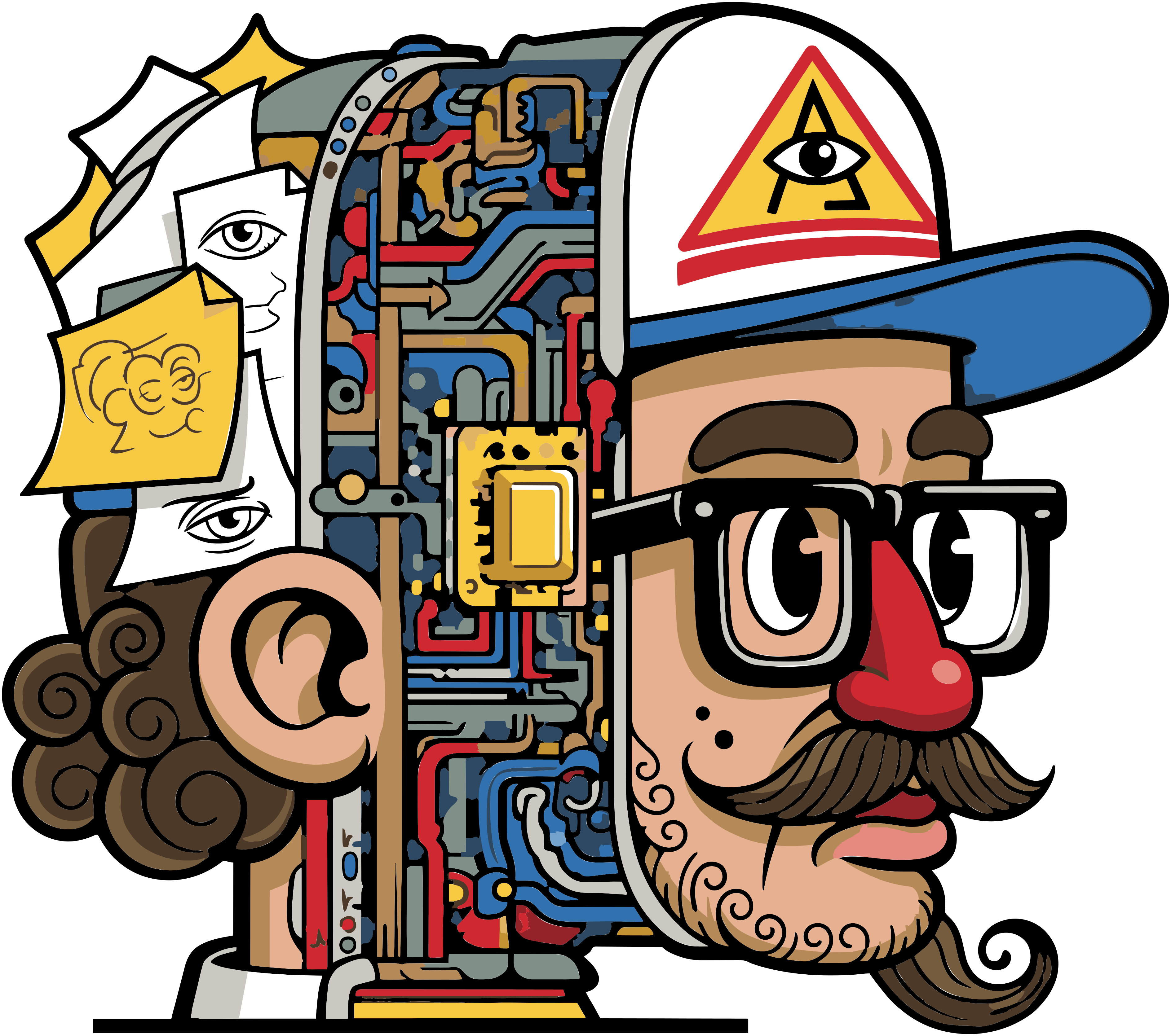
AI can summarise interviews, organise research, generate ideas and build first prototypes in minutes.
That is genuinely useful.
But faster does not automatically mean better.
For designers, the more important question is becoming: what should we hand over to AI, and what should remain ours?
AI amplifies the process underneath it
Most AI adoption in design is still about efficiency: transcription, synthesis, documentation, ideation and prototyping.
There is little value in doing repetitive work manually just because we always have.
But speed works both ways.
A weak interview can become a polished but misleading insight faster. A vague brief can produce hundreds of mediocre ideas. Superficial testing can create confidence without understanding.
AI does not magically improve the design process. It amplifies what is already there.
AI is great at patterns. Design sometimes needs to break them.
AI is exceptionally good at recognising and recombining patterns.
That makes it useful for finding themes in research, exploring alternatives and making connections across large amounts of information.
But innovation often comes from noticing what does not fit the pattern.
It can mean reframing the problem, following an uncomfortable observation or borrowing an idea from somewhere unexpected.
AI can help us explore those possibilities. But left on its own, it can also pull us towards what is familiar, probable and already well represented.
That makes human judgement more important, not less.
We can delegate the work without delegating responsibility
Designers do not need to perform every step manually to own the result.
AI can organise evidence, suggest interpretations, challenge an idea or turn a rough concept into a prototype.
But we still need to ask:
What is missing?
What assumptions are hiding in the output?
Does this reflect what people actually told us?
Is this genuinely interesting, or simply plausible?
And when should we ignore the AI completely?
The artefact may be produced with AI. The judgement behind it is still ours.
Human-centred design still needs humans
There is one boundary worth protecting.
A simulated user is not a user.
AI can generate a convincing customer persona or predict how someone might respond. But it cannot actually experience a confusing service, hesitate before answering a sensitive question or surprise us with something we had never considered.
The opportunity is not to replace human research.
It is to use AI around it: summarise more material, challenge our interpretation, find contradictions and suggest alternative framings.
A simple principle might be:
Think first.
Work with AI.
Check against reality.
Stay the designer.
The real opportunity: reinvest the time
The most interesting benefit of AI may not be doing the same work faster.
It may be what we choose to do with the time we save.
If transcription takes minutes instead of hours, perhaps we can conduct another interview.
If prototyping becomes easier, perhaps we can test several directions instead of one.
If documentation takes less effort, perhaps we can spend more time investigating the strange observation that does not fit the story.
That is where AI could genuinely improve design: not by removing human involvement, but by creating more room for the parts that need it most.
And perhaps that is the question worth carrying forward:
How much of the work can we hand over without handing over the judgement that makes the work worth doing?